 Skip to content
Planning the right Boston Airport Departure Timing can make the difference between a smooth journey and a stressful rush to your gate. Heavy traffic, peak commuting hours, airport congestion, and security lines can all affect your trip to Boston Logan International Airport. By leaving at the right time, monitoring traffic conditions, and choosing reliable airport transportation, you can reduce delays and arrive at the terminal with plenty of time before your flight. Whether you’re traveling for business or leisure, this guide shares practical tips to help you beat Boston traffic, navigate Logan Airport efficiently, and start your trip with confidence.
Boston Airport Departure Timing
Boston Logan International Airport is only three miles from downtown Boston, but getting there can be tricky. Small streets, tunnels, and old roads can make travel slow and confusing. Whether you are traveling for work, visiting family, or going to a doctor, knowing the traffic can help you reach the airport calmly and on time.
Executive travelers and families alike discover that better logistics come from knowing how rush-hour congestion, construction projects, and terminal rules work together. Smart planning transforms your airport journey from guesswork into a reliable system that gets you there on time, every time.
Understanding Boston’s Peak Traffic Hours
The Mass Pike and I-93 show severe slowdowns during morning hours between 7:30 AM and 9:30 AM. Late afternoon from 4:00 PM to 6:30 PM creates even worse delays when rush hour meets airport tunnel backups. These times regularly affect anyone using the Sumner or Ted Williams tunnels to reach Logan.
Travelers focused on being on time should add an extra 15-30 minutes during these windows. This matters most when going through downtown or crossing the Zakim Bridge, where traffic often doubles your expected travel time.
Most Congested Routes to Logan Airport
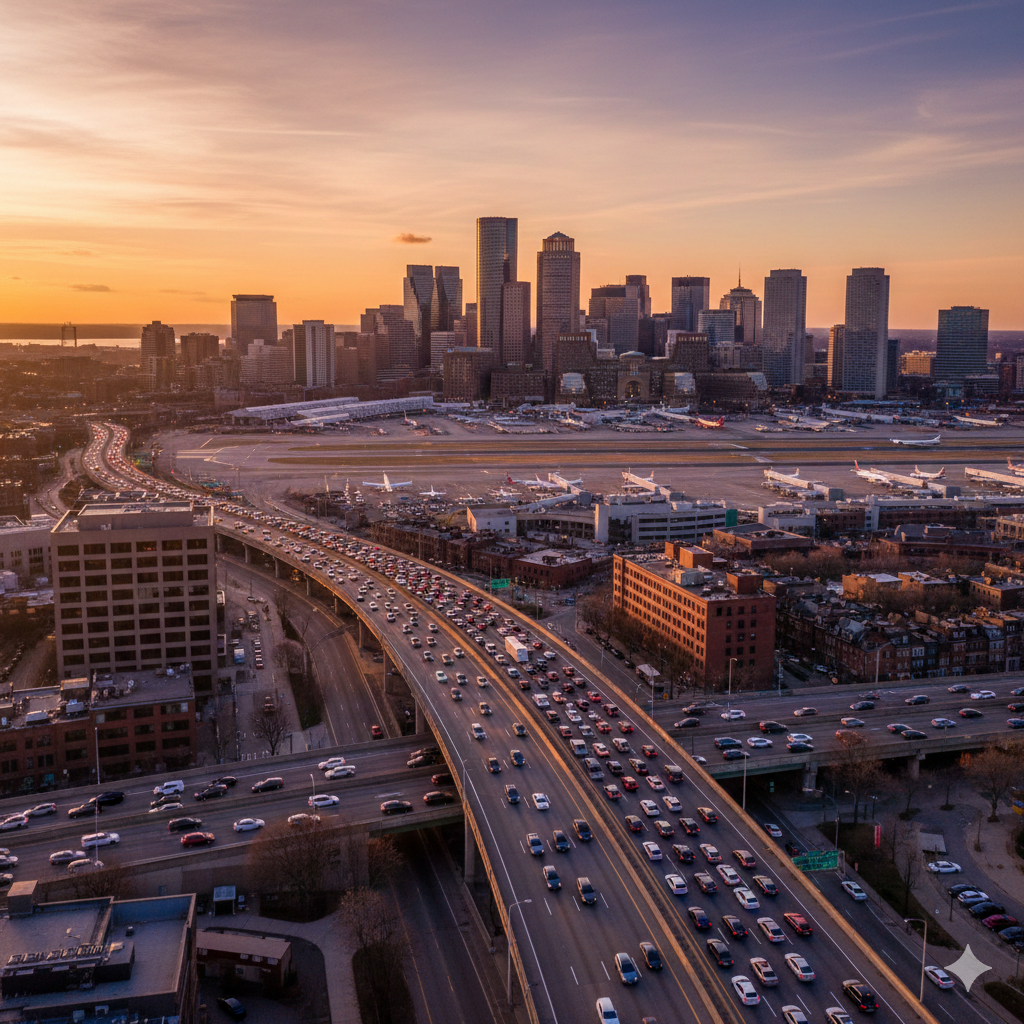
Skilled drivers know that I-93 North and South get very busy near the I-95/Route 128 area. The Mass Pike and Route 1 also have heavy traffic during work hours. Drivers pay extra attention to these roads from 7:00–9:30 in the morning and 4:30–7:00 in the evening.
The Sumner, Callahan, and Ted Williams tunnels serve as main gateways to Logan. These create serious traffic impacts when combined with Storrow Drive and Seaport Boulevard lane reductions. Red Sox games at Fenway Park or Celtics and Bruins games at TD Garden make evening traffic even worse.
Smart Navigation Strategies for Boston Traffic
Boston isn’t conquered through speed—it demands strategic planning. Years of coordinating ground transportation show that even experienced travelers struggle when they treat route knowledge as optional. What looks walkable on maps becomes complicated when underground tunnels and narrow colonial streets create bottlenecks.
Professional chauffeurs who’ve spent decades watching traffic patterns understand what GPS never will. Boston’s weather, pickup zones, and major venues like Fenway Park can transform normal routes into nightmares. Smart coordinators don’t just account for rush hour—they know how I-93, Mass Pike, and airport tunnel roads flow differently at 8:15 AM versus 8:45 AM.
This makes smooth travel less about luck and more about respecting Boston’s reality. Punctuality depends on treating traffic tools and local driver expertise as essential partners in your airport plan.
Logan Airport Ground Transportation Challenges
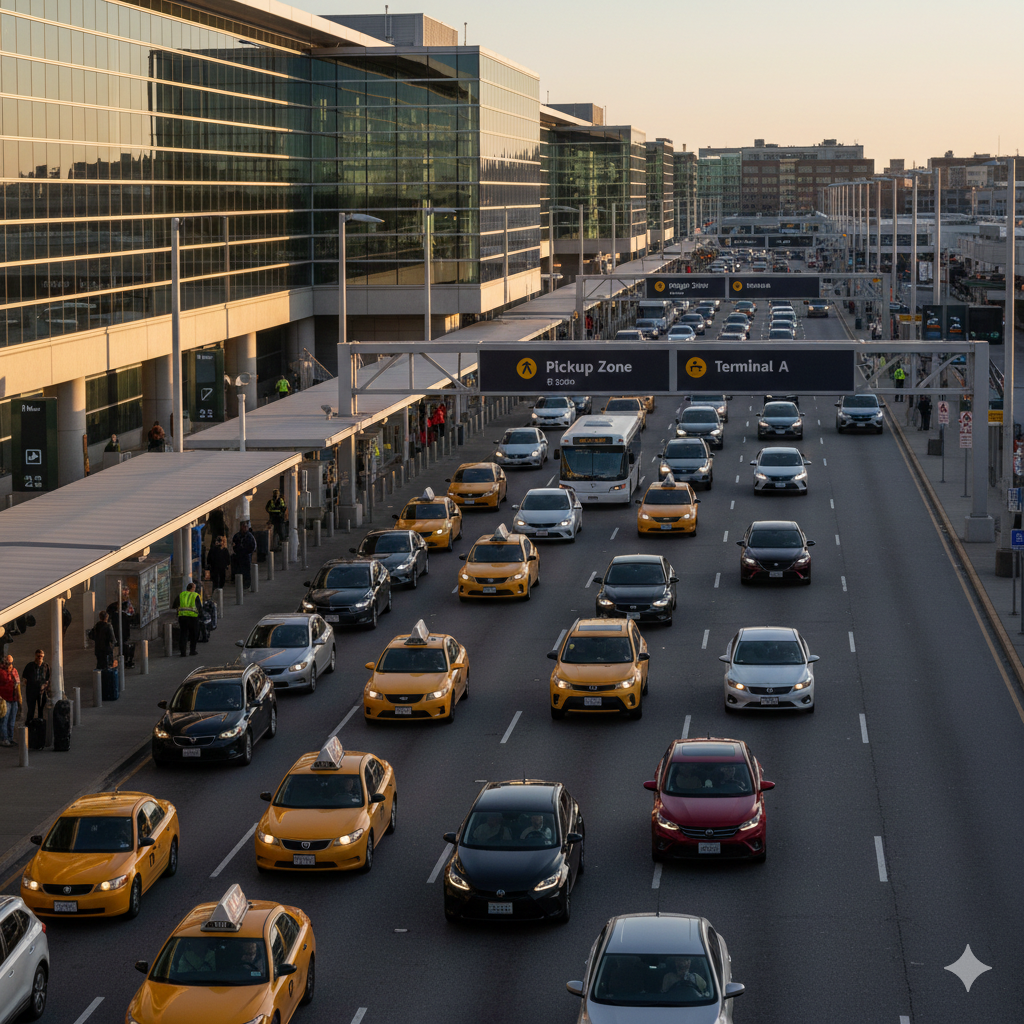
Logan’s layout creates pressure points when coordinating pickups, especially during last-minute gate changes or baggage delays across different terminals. Each terminal has its own pickup zone system. Shifting traffic through underground tunnels and historic narrow roads means that even solid plans need adjustment.
Strategic planning around Boston’s consistently high congestion levels turns what should be simple transfers into puzzles. Success demands insider knowledge, route intelligence, and preparation to ensure smooth travel despite the compact layout of one of America’s oldest cities.
How to Time Your Airport Departure Perfectly
Work Backward from Boarding Time
Planning forward misses crucial details. City traffic slows your driver before pickup, so confirming your terminal and curb level the night before builds a realistic timeline. This prevents rushed starts at the departure curb and keeps everything calm.
Start by thinking through each step in reverse. If boarding is at 2:00 PM, subtract security and gate walking time (typically 45 minutes at Logan). Then subtract city travel time (20-60 minutes depending on traffic and location). Finally, add your personal prep window. This keeps your plan grounded in reality.
Understanding Logan Terminal Pickup Rules
Logan Airport uses different levels for arrivals and departures in many areas. Mixing up levels costs time and creates unsafe situations at the curb. Each terminal has pickup zones meant for quick pickups rather than extended waiting. Being ready before your driver reaches the curb keeps things moving smoothly.
Curbside zones at each terminal get crowded during peak flight times. Wait times increase especially during bad weather or when airline delays stack up. Agreeing on a clear meeting point like the upper-level departure door helps avoid confusion during busy periods.
Quick Planning Guide by Travel Type
| Travel Scenario | Action steps | Benefit |
| Domestic Arrival with Carry-On | Confirm terminal, choose exit door, preselect pickup spot | Reduces curbside wait and confusion |
| International Arrival with Checked Bags | Expect longer processing, plan a later pickup time | Prevents the vehicle from arriving too early |
| Early Morning Departure | Confirm the first transport option is running | Avoids last-minute route changes |
| Weekday Rush Hour Departure | Add a 15-30 minute buffer to the pickup time | Keeps boarding time realistic |
| Winter Weather Day | Choose direct routes, allow extra time | Limits exposure to delays and cold |
Weather and Construction Impact on Boston Traffic
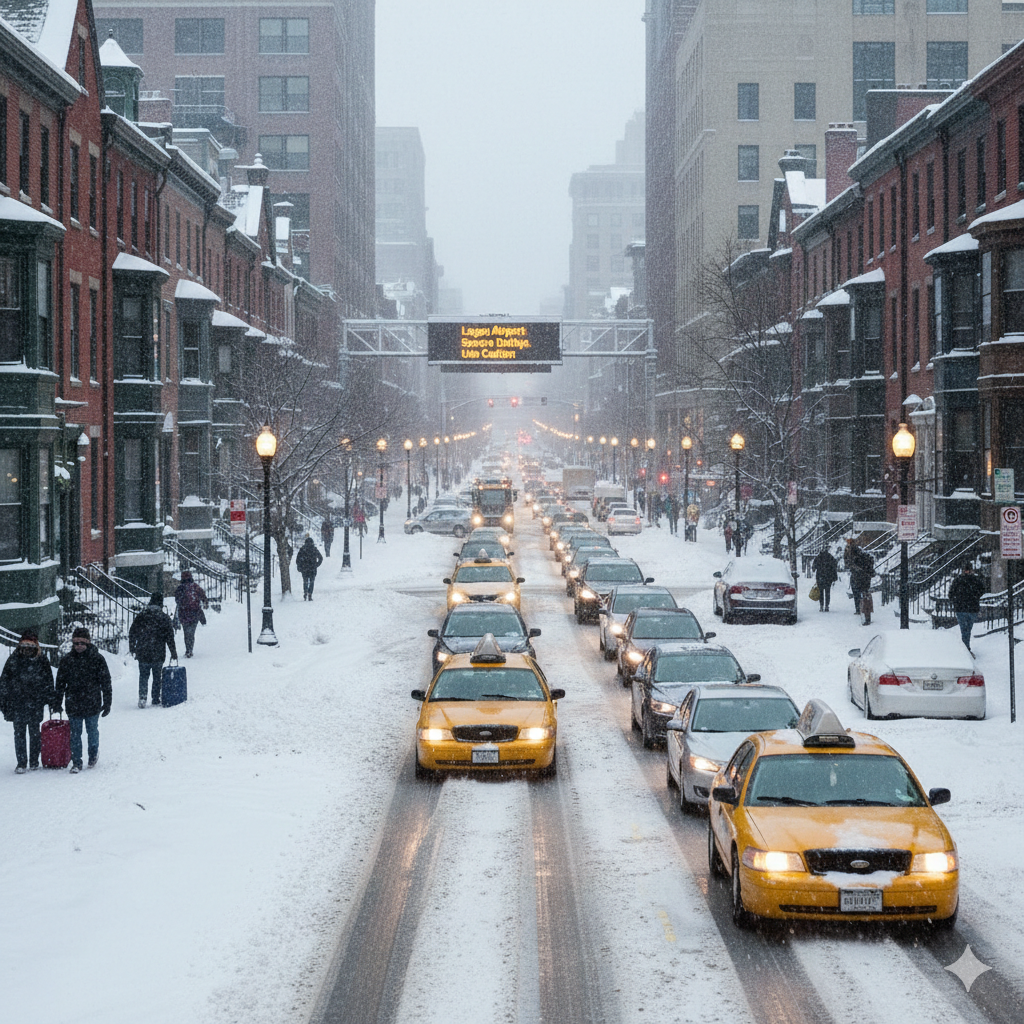
Weather significantly changes Boston’s traffic flow. Rain, snow, and ice can transform normal rush hour from 30-60 minutes of delay into multi-hour gridlock. Winter months demand extra caution and planning when heading to the airport.
Ongoing construction projects introduce sudden lane closures across primary routes like the Mass Pike and I-93. Travelers need to build margin for error into every airport plan since infrastructure work regularly affects even familiar routes without warning.
Choosing the Right Ground Transportation
Professional car service stands apart when rideshare pickup zones at Logan become overwhelmed. Vetted chauffeurs utilize traffic intelligence tools and local knowledge to navigate tunnel congestion. They use alternate routes like South Boston Bypass Road to ensure predictable arrivals.
Taxi availability fluctuates during peak flight times at Logan. Having a pre-arranged car service eliminates the stress of finding transportation when you’re tired from your flight. Professional drivers monitor your flight status and adjust pickup times accordingly.
Planning for Airport Arrivals
Coordinating an airport pickup begins with confirming your arriving terminal before landing, not when you exit baggage claim. Families and groups lose more time to confusion at the curb than to actual traffic. This is why agreeing on a clear meeting point before anyone reaches the terminal matters so much.
Upper-level departure doors work well as meeting spots. This keeps curbside pickup zones from becoming bottlenecks, especially when busy flight peaks turn limited curb space into pressure points. Being ready matters more than making your driver wait.
Planning for Airport Departures
Prepare the Night Before
Packing the night before cuts down on last-minute decisions about which jacket to wear or where to find that missing charging cable. Working backward from boarding time rather than published departure time helps you build a realistic timeline. Account for security screening, walking to the gate, and the city traffic that affects drivers before they reach your hotel.
Confirm your terminal and curb level before you leave. Mixing up levels at Logan will cost time and create unsafe situations when your vehicle tries to reach the right spot. Getting out of Boston toward the airport can feel harder than arriving because departures reward discipline.
Key Timing Considerations
Departure Planning Checklist
- Add terminal arrival and curbside drop-off time – Factor in 10-15 minutes for navigating to the correct terminal level
- Calculate travel time from your location – Downtown Boston areas need extra time for your driver to reach the curb
- Include rush hour buffers – Add 15-30 minutes during 7:30 AM-9:30 AM and 4:00 PM-6:30 PM windows
- Account for security and gate walking – Budget 45 minutes at Logan for these steps
- Build in personal prep time – Allow yourself enough time to check out and load luggage without rushing
Most people underestimate how long it actually takes to leave their hotel, get through the lobby, load luggage, and navigate a dense area. Even small morning choices start the cascade that makes departure plans fall apart in the final thirty minutes. Airlines often recommend arriving well ahead—generally 2.5 hours for international flights versus 2 hours for domestic flights.
These guidelines are just starting points. Your real departure plan should account for whether you’re checking bags, flying internationally, or dealing with weekday rush periods. The practical method is to reduce decision points by preparing the night before and always adding buffer time during rush hours, winter weather, or major events.
Special Considerations for Families and Medical Travel
When traveling with children or medical equipment, the practical approach is direct. Fewer transfers mean fewer steps and a calmer experience. Families should prioritize safety and convenience by arranging transportation with child seats in advance. This ensures compliance with local regulations while avoiding last-minute delays.
Parents dealing with hospital appointments or outpatient visits need extra buffer time built into their plans. Fixed medical appointments don’t negotiate, and winter days demand you expect each step to take longer. Direct travel options with child seats or booster seats available upon request are essential for maintaining both punctuality and peace.
Common Mistakes to Avoid
Top Mistakes Travelers Make
- Waiting until departure day to confirm terminal details – Check the terminal and pickup location the night before
- Not accounting for rush hour traffic – Always add 15-30 minutes during peak times
- Assuming GPS knows the best route – Local knowledge beats navigation apps during Boston rush hours
- Mixing up arrival and departure levels – Confirm which level your driver will meet you at
- Booking rideshare for time-sensitive trips – Professional car service provides reliability that rideshare can’t match
Boston Traffic Statistics You Should Know
Boston consistently ranks among the top 10 most congested cities in the United States. With an #8 national traffic ranking across metro areas, this historic hub presents unique challenges. Every commuter faces an average annual delay of 149 hours per year. Peak hours witness a staggering 2.5x travel time increase that transforms straightforward journeys into tests of patience.
Understanding these statistics helps you plan better. When you know Boston drivers spend nearly a week per year sitting in traffic, you realize why adding buffer time isn’t optional—it’s essential for stress-free airport travel.
Terminal-Specific Pickup Locations at Logan
Terminal A Pickup
Proceed past the baggage claim area on the Arrival Level. Exit Door A102, cross over two traffic lanes, then meet your driver at the designated Limo Stand. This location keeps you away from the crowded rideshare zones and provides a clear meeting point.
Terminal B Pickup
Terminal B varies by airline. For American and Southwest, proceed to Departure Level Stop 1 (exit through Door B206). For Air Canada, Alaska, Boutique Air, Spirit, and United, use Stop 2 (exit through Door B207, departure level). Understanding these specific navigation points prevents frantic searching that turns smooth pickups into stressful encounters.
Popular Boston Routes We Service
Whether you’re traveling from Logan Airport to Downtown Boston, the refined streets of Back Bay and Copley, or crossing the river to Cambridge and Harvard, knowing corridor-specific congestion patterns proves essential. The Financial District, Seaport District, North End, Faneuil Hall, and Beacon Hill each present distinct timing windows where traffic either flows freely or creates gridlock.
Why Choose Boston City Ride for Your Airport Transportation
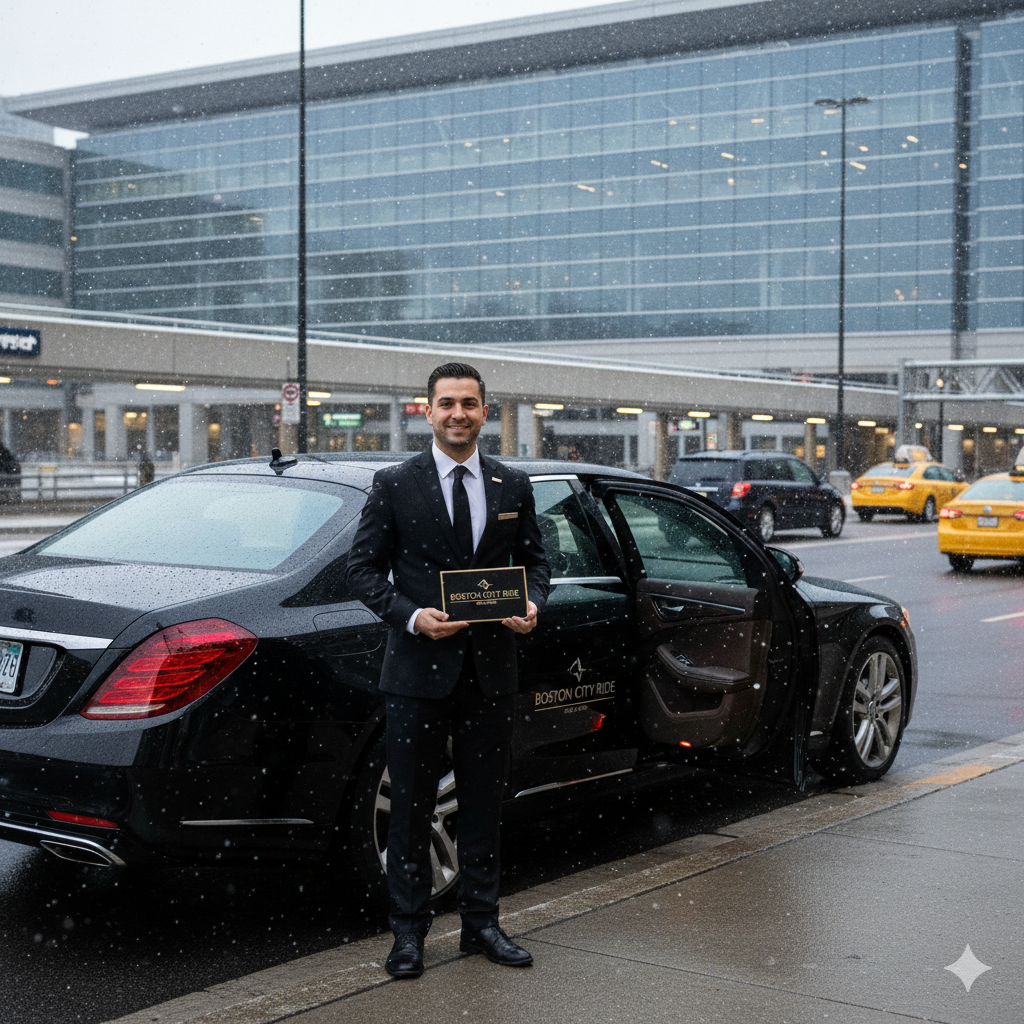
At Boston City Ride, we understand that getting to Logan Airport on time isn’t just about having a vehicle—it’s about having a partner who knows Boston’s traffic patterns inside and out. Our professional chauffeurs don’t rely on GPS alone. They use years of local knowledge combined with real-time traffic intelligence to choose the smartest routes for your specific departure time.
We offer luxury sedans, SUVs, and Sprinter vans with suit-dressed professional drivers who monitor your flight status and traffic conditions throughout your journey. Whether you need child seats for family travel, extra space for medical equipment, or simply want the peace of mind that comes with pre-arranged service, we’re here to make your airport experience effortless. Our 24/7 concierge team stands ready to help determine your ideal departure time and answer any questions about terminal logistics or route selection.
Unlike rideshare services that may cancel or surge prices during peak times, Boston City Ride provides guaranteed availability with transparent pricing. We track your flight for arrivals, adjust pickup times for delays, and handle the stress of Boston traffic so you don’t have to. When you choose Boston City Ride, you’re choosing reliability, professionalism, and the local expertise that transforms airport travel from a source of stress into a seamless part of your journey.
Get Expert Help Planning Your Airport Timing
Unsure about what time to schedule your airport service when leaving Boston? Our expert concierge team stands ready to help determine your ideal departure time. Simply email us through our 24/7 monitored address, and our team will reply with personalized recommendations for your specific travel needs.
We’ll consider your starting location, flight time, whether you’re checking bags, and current traffic patterns to give you a customized pickup time. This free consultation ensures you arrive at Logan with time to spare, without the stress of guessing or the waste of arriving too early.
How early should I leave for Logan Airport during rush hour?
Add 15-30 minutes to normal travel time during 7:30-9:30 AM and 4:00-6:30 PM peaks.
What’s the most reliable route to Logan from Downtown Boston?
Professional drivers prefer the Ted Williams Tunnel or Sumner Tunnel, choosing based on real-time traffic conditions.
Should I use the arrival or departure level for pickup at Logan?
Most professional car services use the departure level to avoid crowded arrival zones.
How much time do I need for international flights at Logan?
Plan to arrive 2.5-3 hours before departure for international flights, accounting for traffic and security.
Does Boston City Ride provide child seats for airport transfers?
Yes, child seats and booster seats are available upon request when booking your service.
Contact Boston City Ride today to schedule your stress-free airport transportation with our professional chauffeur service!